AML,CFT, WMD DIRECTIVES AND UNSCR SANCTION LIST

Central Commitee for Counter Terrorism Order No.1/2018 (30-7-2018) Eng Version

Central Commitee for Counter Terrorism Order No.1/2018 (30-7-2018) MM Version

Central Commitee for Counter Terrorism Order No.2/2018 (30-7-2018) MM Version

Central Commitee for Counter Terrorism Order No.2/2018 (30-7-2018) Eng Version

Consolidated United Nations Security Council Sanction List

Current Situation on AML CFT and Risk

FRD Training and Guidelines (25-26 Sep 2021)

International Standards and Myanmar Effort AML-CFT

Legal Person Risks for DNFBPs 14 Feb 2023

Proliferation for MOPF 28-29 July 2021

The Counter Terrorism Law No.23/2014 (4-6-2014) MM Version

The Counter Terrorism Law No.23/2014 (4-6-2014) Eng Version

Guideline of Countering the Financing of Proliferation of WMD MM Version

National Strategy

(2024-2028)

2026 Anti- Money

Laundering Law


KBZMS Corporate Governance Policies

AML/CFT Policy

TTR/STR Reporting Policy

PEP Management Policy

Sanction Monitoring Framework

KYC Management Policy

UNSCR

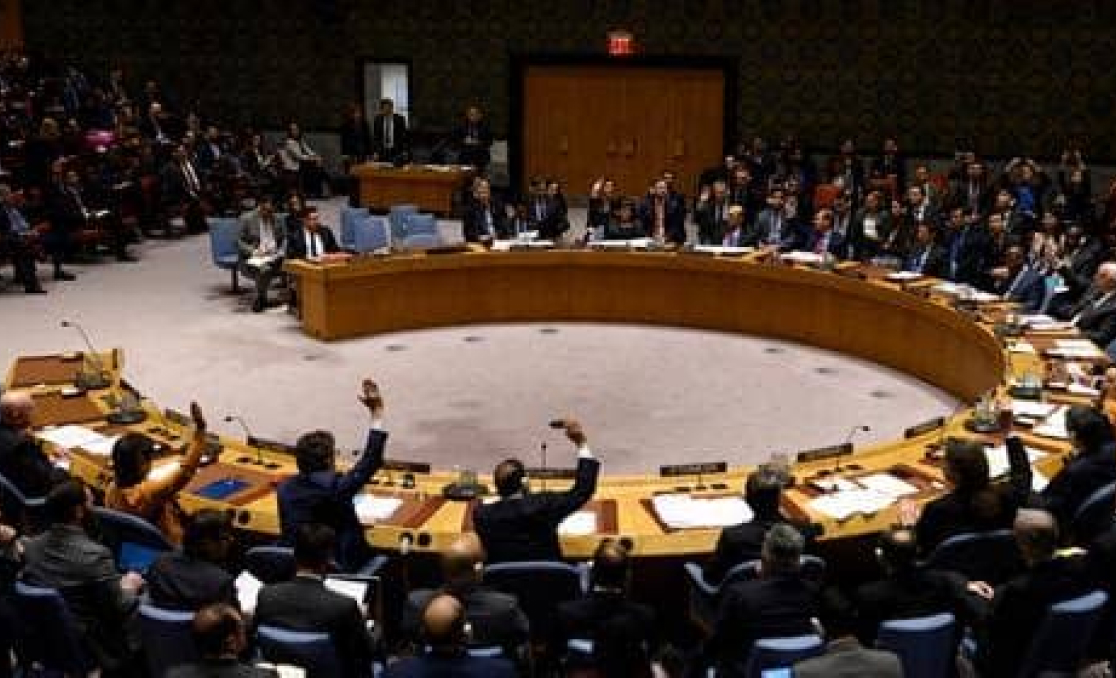
Along with the founding of the United Nations, the UN Security Council was established in 1945. The Security Council is the organization’s most powerful body responsible for maintaining international peace and security. It can issue sanctions and even authorize military force. The five permanent members are the People’s Republic of China, France, the Russian Federation, the United Kingdom, and the United States (known as the P5). In addition to their permanent status, each P5 nation has the power to veto any resolution with which it disagrees. Ten other UN members, each elected for a rotating two-year term and without veto power, round out the Security Council.

A United Nations Security Council resolution is a UN resolution adopted by the fifteen members of the Security Council; the UN body charged with “primary responsibility for the maintenance of international peace and security”. The UN Charter specifies that a draft resolution on non-procedural matters is adopted if nine or more of the fifteen Council members vote for the resolution, and if it is not vetoed by any of the five permanent members. Draft resolutions on “procedural matters” can be adopted on the basis of an affirmative vote by any of the nine Council members. Myanmar has been a member of the United Nations since April 19,1948. Myanmar is compliance with International Standards and United Nations Rules varies across different areas such as Financial Action Task Force (FATF), UN Human Rights Responsibilities and UN General Assembly Vote.

UNSCR Sanction List Link

United Nations Security Council Resolution No.1267

United Nations Security Council Resolution No.1718


AML/CFT Training Program 

9
14 Aug 2026
BEYOND INSURANCE: Connecting Culture, Communities and Business Through Resilience
KBZMS General Insurance launched the first stop of its 2026–2027 Disaster Risk Reduction (DRR) Roadshow with the “Building Continuity Through Resilience: Safeguarding Livelihoods, Culture & Business” Seminar, held in Taunggyi on 14 August 2026. We were honored by the presence and support of U Nyo Myint, Vice Chairman of KBZ Group; Daw Nang Kham Lu, Shan State Minister of Social Affairs. We also extend our sincere appreciation to the Shan Taung Parahita Network, Lin Yone Parahita, Inle Youth Volunteer Network, as well as local organizations, professionals, business leaders, partners and everyone who joined us in making this meaningful conversation possible. At KBZMS, insurance goes beyond providing protection and paying claims. Through our “Beyond Insurance” approach, we aim to work alongside communities and businesses to better understand risks, strengthen preparedness and build long-term resilience before, during and after disasters. At the Taunggyi seminar, we brought together three different but deeply connected perspectives Culture, Communities and Business under one shared goal: Resilience. Preserving Culture Through Resilient Building Daw Chaw Kalyar, Architect & Researcher, STATEMENT Architecture + Design, shared lessons from the earthquake and explored how we can rebuild stronger while preserving Shan State’s cultural heritage, local architecture and traditional craftsmanship. Empowering Communities to Lead Daw Ya Mon Thaw, Excellence & Resilience Lead, Inle Resource Center (IRC), highlighted the importance of strengthening local knowledge, experience and capacity so that communities can take the lead in preparing for disaster risks, protecting their livelihoods and building resilience for the future. Understanding Risk & Ensuring Business Continuity U Kyaw Zayar Lin, Head of Survey & Engineering, KBZMS, shared insights into Myanmar’s earthquake risk landscape and how Disaster Risk Management and Business Continuity Planning (BCP) can help businesses better understand and prepare for risks while ensuring continuity when unexpected disruptions occur. While these perspectives may be different, they are all interconnected in building stronger, more resilient communities and businesses. Resilience cannot be built by one organization alone. It requires government, the private sector, professionals, partner organizations and local communities to work together, share knowledge and take collective action. This is what “Beyond Insurance” means to KBZMS. It means looking beyond insurance protection and claims, and working together to strengthen knowledge, preparedness and resilience across the communities and businesses we serve. Taunggyi is only the beginning of this journey. Through the KBZMS 2026–2027 DRR Roadshow, we will continue bringing together communities, businesses, professionals and partners to build stronger connections, share practical knowledge and move forward together toward a more resilient Myanmar.
Successful!
Thank you for filling out the information.
Our staff will contact you back as soon as possible.
Successful!
Thank you for filling out the information.
Our staff will contact you back as soon as possible.